

What are the costs of cancer?
One aspect of prostate cancer that we have not covered before at The Prostate Zone is the financial impact of cancer. It had been sitting at the back of my mind for a while, until we unexpectedly encountered Sue Woodall.
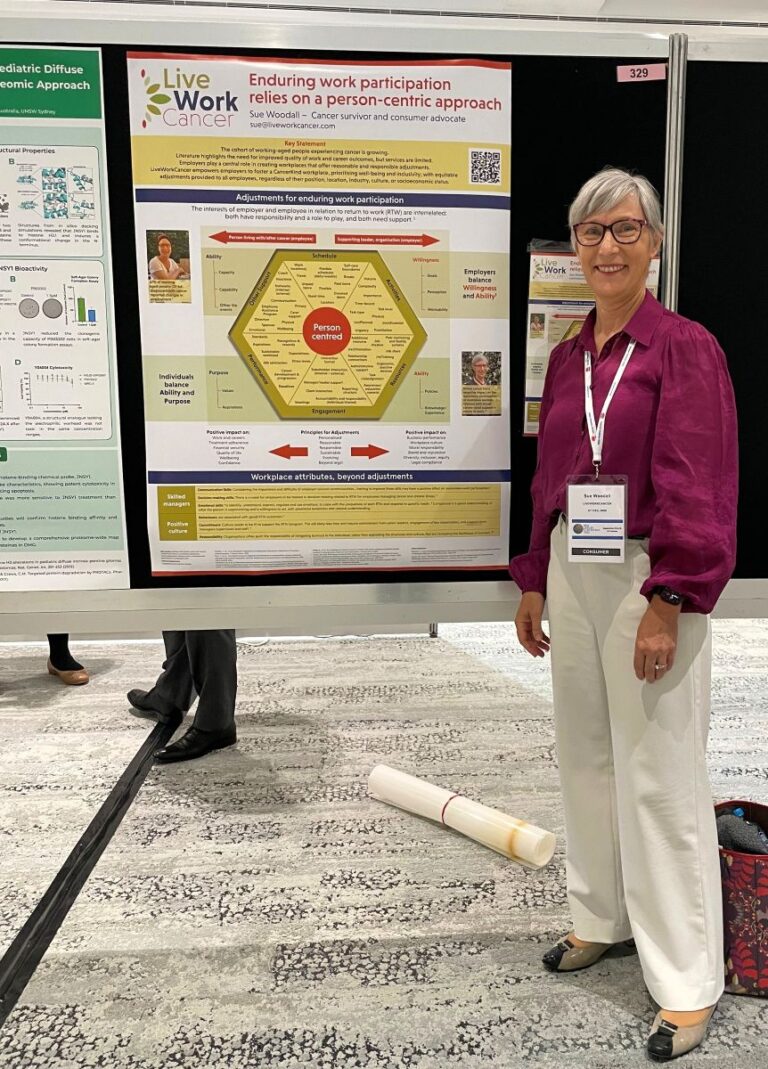
Sue is a breast cancer survivor whose career was derailed by cancer, leading her to think deeply about this problem.
Before talking about Sue and her organisation (Live Work Cancer), it’s time for a brief explanation of “financial toxicity”.
Financial toxicity is the term used to describe the potential cost to patients (and their families) of cancer. Some of these costs may include:
- Out-of-pocket fees for the tests used to diagnose cancer and monitor its progress;
- Out-of-pocket fees for medical specialists, hospital care, medicines, etc.;
- Travel costs to attend appointments; and
- Time away from work – which may even mean being unable to remain employed.
In Australia we are fortunate to have the Medicare system and excellent public hospitals; however, not all costs may be covered and people from regional or rural areas often face greater distance-related expenses.
And then there are those people who are self-employed or freelancers! We’ve come across several men over the years who were happily working in their own businesses as tradies or subcontractors when they received their prostate cancer diagnosis. Wham!
What help is available?
Okay, now to what Sue has created, based on research, her lived cancer and her professional experience, and the voices of over 100 people who she has supported so far. According to the Live Work Cancer website,
Our purpose is to ensure people affected by cancer are not left to navigate work alone, and that workplaces are better equipped to respond with care, confidence, and consistency.
We focus on practical, person-centred support that helps individuals make informed decisions about work, and helps employers create safer, more supportive environments.
“Too many people affected by cancer continue to experience avoidable work loss, financial stress and isolation. Too many managers want to help but feel uncertain about what to say or do.
We believe workplaces can become more CancerKind®: more informed, compassionate and confident in supporting their people.
Becoming a charity helps us build toward that future.”
When we came across Sue and LWC, I was so excited. We had an hour-long online chat to understand more about her and how LWC came into being, as well as what resources she has made available.
What I really like about Sue’s approach with LWC is that she tackles the challenges for both the person with cancer and their employer. Both parties need support to navigate the return to work and gradual understanding of how that will unfold.
We strongly encourage you to have a look at the LWC website and let others know about it too.
Other resources
Cancer Council Australia has booklets and fact sheets available via its website (see the Living with Cancer section). CCA also has a page dedicated to financial costs and assistance.
Peter MacCallum Cancer Centre’s website has a page on financial toxicity.
Financial toxicity can be extremely stressful. Many hospitals have social workers or psychologists available for their patients, so check with your hospital.
If you find yourself (or your partner) struggling, we have some posts that discuss ways to cope – you may find them helpful.
Estimated reading time: 3 minutes