

Please note:
This article is not intended to minimise the distress felt by any person who is diagnosed with cancer. Our comments are offered as guidance to help readers navigate the possible emotional pathways to a happier, healthier future.
Do you feel broken or shattered?
Cancer is a series of shocks to your system
Any cancer diagnosis usually comes as a shock. Then it can be one shock after another – firstly the fact that YOU have cancer (why me?). Then you might have to make a lot of decisions about things you never expected to consider:
- How do I tell my family and friends?
- Should I get a second or third opinion?
- How long can I take to make my decision?
- Is my treatment needed urgently or can it be postponed?
- Where do I go to get treated?
- Public health system or private health?
- What will all this cost?
- How much time will it take and can I get enough time off work?
- What kind of side-effects might happen?
And so on, and so on.
Has all of this cancer stuff left you feeling broken or shattered? How can you put together those jigsaw pieces of yourself? You may feel like you cannot be put back together again, but is it possible to create a new (even better) version of yourself?
This is where the Japanese art of Kintsugi offers some clues.
What is Kintsugi?
Kintsugi is the Japanese art of repairing broken pottery with gold. In Kintsugi, the cracks and breaks are not hidden. Instead, they are honoured and illuminated, making the vessel more precious, more beautiful and utterly unique. The “new” vessel is both the same and different – stronger in places, bearing golden seams that tell the story of its survival.

After the shattering of our old selves, how can we gather those pieces together and begin to rebuild? How do we honour our scars, our fears and our losses, whilst also discovering new strengths and deeper sources of beauty within ourselves?
Can we accept that we are changed, permanently, yet still whole – maybe even more whole than before?
By putting the jigsaw pieces of ourselves together, we bring ourselves and our relationship together following prostate cancer diagnosis and treatment. In fact, this is the same after any cancer that impacts our ability to be intimate again.
Numerous aspects of our self need to be brought together and re-engaged; this is true emotionally, mentally, psychically and spiritually. We need to reintegrate our sensual side and our feelings, in order to regain intimacy and pleasure with our partner or our self. The left brain needs to move aside so that we can relax and enjoy the moment.
Stress and anxiety are the enemies that we need to overcome. If these two are living “rent-free in your brain”, they usually impact your ability to engage, enjoy, rediscover your libido, and your abilities.
Restoring your nerves
Prostate surgery usually injures or damages nerves. In some cases, they will heal with time; in other cases, they may remain out of action. PDE5 inhibitors (medications like Viagra and Cialis) can increase blood flow to the penis, but they don’t fix the nerves. Incontinence (leaking urine) adds to the difficulty of being intimate.
Low dose PDE5 medications taken daily may help erectile tissue and blood flow to your penis. You can also practise pelvic floor muscle exercises to improve incontinence. Using a vacuum pump (like the Vacurect) for penile rehab is another way to help bring Percy back to life! Make sure you look at all the options available, besides the pills. Our article about erections is a good place to start. If necessary, seek professional help.
What else is going on?
What else is going on in your life? Are you filling your diary up with things to keep you busy and avoid thinking about yourself or the state of your relationship? What is happening for you physically, mentally, emotionally and spiritually?
Are you really stressed out? Have you considered ways to reduce the impact of stress that might be undermining your ability to “get it up”? Acupuncture can be really helpful. Yoga, meditation, Tai chi and Reiki are all avenues you can explore. You can learn for yourself, or with a partner.
This is about “bringing yourself to the party” – bringing those signals back online. Engage your brain, your feelings, your imagination and fantasies. Remember to RELAX and put aside expectations for yourself or your partner.
What motivates you?
Let’s consider another Japanese idea – ikigai. This word refers to a passion that gives value and joy to life.
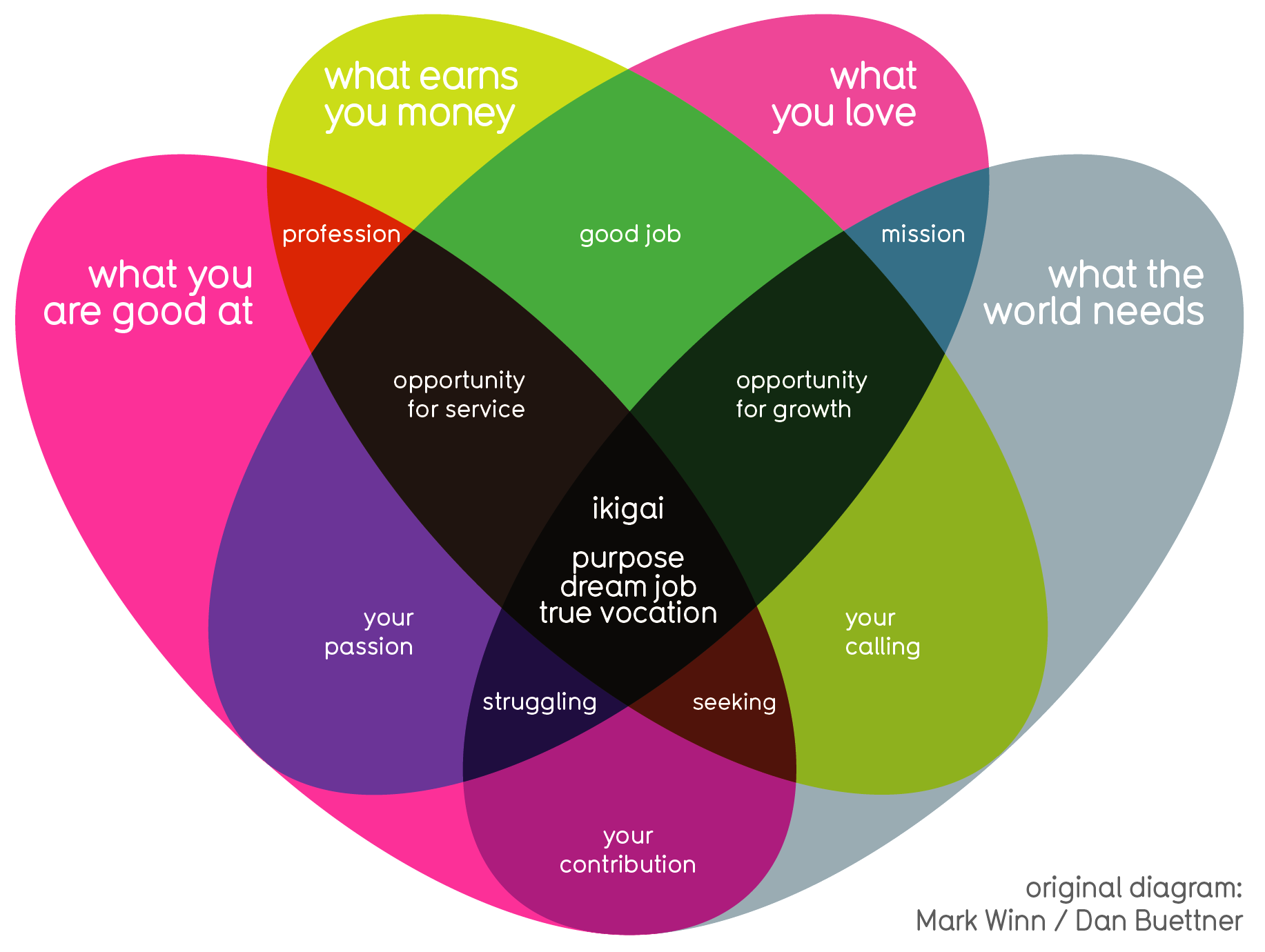
What is your “life worth” or “life purpose”? What will motivate you to make changes to the ways in which you want to be intimate?
Let’s get down to basics
Partner involvement
What is happening with your partner? Is she or he in or out of the relationship? Are you like ships passing in the night? Does your partner want to be intimate with you? Have you even discussed this? What does “intimacy” mean for them and what does it mean for you? What value or importance do you both place on your relationship?
Have you taken the time to sit down with your partner to discuss how you both feel and what you both want? Consider having this kind of chat in a neutral place, like a café or a seat in a park. If this is in the “too hard basket”, perhaps professional counselling may help you to overcome the barriers.
Consider attending a support group to hear how others have dealt with the changes to their lives following cancer diagnosis and treatment – you do not have to do this on your own!
Garbage in, garbage out
What foods are you eating? How is your diet (general nutrition)? Consider eliminating or cutting down inflammatory foods that are unhealthy – such as fried food and processed food. Review the Mediterranean diet and see what you can incorporate into your daily meals.
Are you smoking or taking “recreational” drugs? If you are, you need to stop!
How much alcohol are you drinking? Cut back as much as possible because booze and cancer don’t mix well.
How is your sleep? Are you constantly feeling tired? What’s keeping you awake? Do you have problems related to snoring? If so, you might have sleep apnoea (which can be addressed and you will feel so much better afterwards).
Doing intimacy differently
Involve your partner as part of your penis rehab. This is about bringing value and joy to being intimate. Communicate your desires to each other. Do you feel ashamed or embarrassed at having to use a pump, medications or other devices to get an erection? There is no need to feel that way! Erectile dysfunction is a mechanical response to the cancer treatment – allowing those negative thoughts can add emotional impact on top of everything else. Who needs that?
It’s not your fault! Get back to the basic pleasure aspect of being together, instead of expecting things to happen in the moment. Change your thoughts and behaviours – yes, you might do things differently, there may be less spontaneity, but make it fun. Find new ways to explore and create new ways to engage with each other.
Change can be difficult, yet it can be new and possibly exciting! You are undergoing a transition to being intimate differently.
Like a lobster shedding its shell in order to grow, we often need to step outside our comfort zone to move forward. Our brains can get stuck in a rut, where we create patterns of behaviour that become automatic. Our repeated actions form grooves in our brain that can prevent us from doing things differently. This can lead us feeling stale and uninterested.
Rewire your brain’s understanding of pleasure. Try new things that you both might enjoy – feel free to explore.
Estimated reading time: 7 minutes